

Why buyers should understand the process
Most buyers do not need a machine-level lesson. They do need enough process awareness to make good sourcing decisions. When you understand how thermoformed trays are made, you can spot where fit risks show up, where revisions are likely, and what information a supplier needs to build the right tray.
That matters when parts are delicate, orientation matters, or the tray has to support more than one job. A tray might need to protect surfaces in transit, keep count accuracy on the line, stack reliably in storage, or work with automated handling. Those requirements shape the tray from the first design review.
If you are still comparing off-the-shelf options, it often makes sense to request a free sample first. If your parts need specific pocket geometry, spacing, or material features, request a custom tray quote instead.
How the thermoformed tray process usually works
The process often begins with the part, not the plastic. A supplier needs to understand what the tray is holding, how sensitive the part is, how it will be loaded and unloaded, and what conditions the tray must survive. That includes dimensions, but it also includes weight, orientation, surface sensitivity, stack height, shipping method, and whether operators or automation will handle the tray.
From there, the tray concept takes shape. Pocket size, pocket depth, draft, spacing, edge support, and overall tray footprint all affect how securely the part sits and how easily it can be picked up again. For buyers, this is the first key point: tray manufacturing is tied directly to use case.
Material selection comes next because the resin has to match the application. HIPS is common for rigid stock and custom trays. PET is often chosen when visibility matters or when a clear lid is useful. Other options may be needed for ESD control, cleanliness requirements, or chemical exposure. If material is a real decision factor, it helps to review thermoformed plastic packaging materials before finalizing a design.
After the design direction is clear, the tooling approach matters. In practical terms, tooling is what allows the tray shape to be formed repeatedly. The quality of that setup affects dimensional consistency, repeatability, and how efficiently revisions can be made. Buyers do not need every machine detail, but they should know that design changes after tooling review can affect schedule, cost, and validation work.
What happens during forming
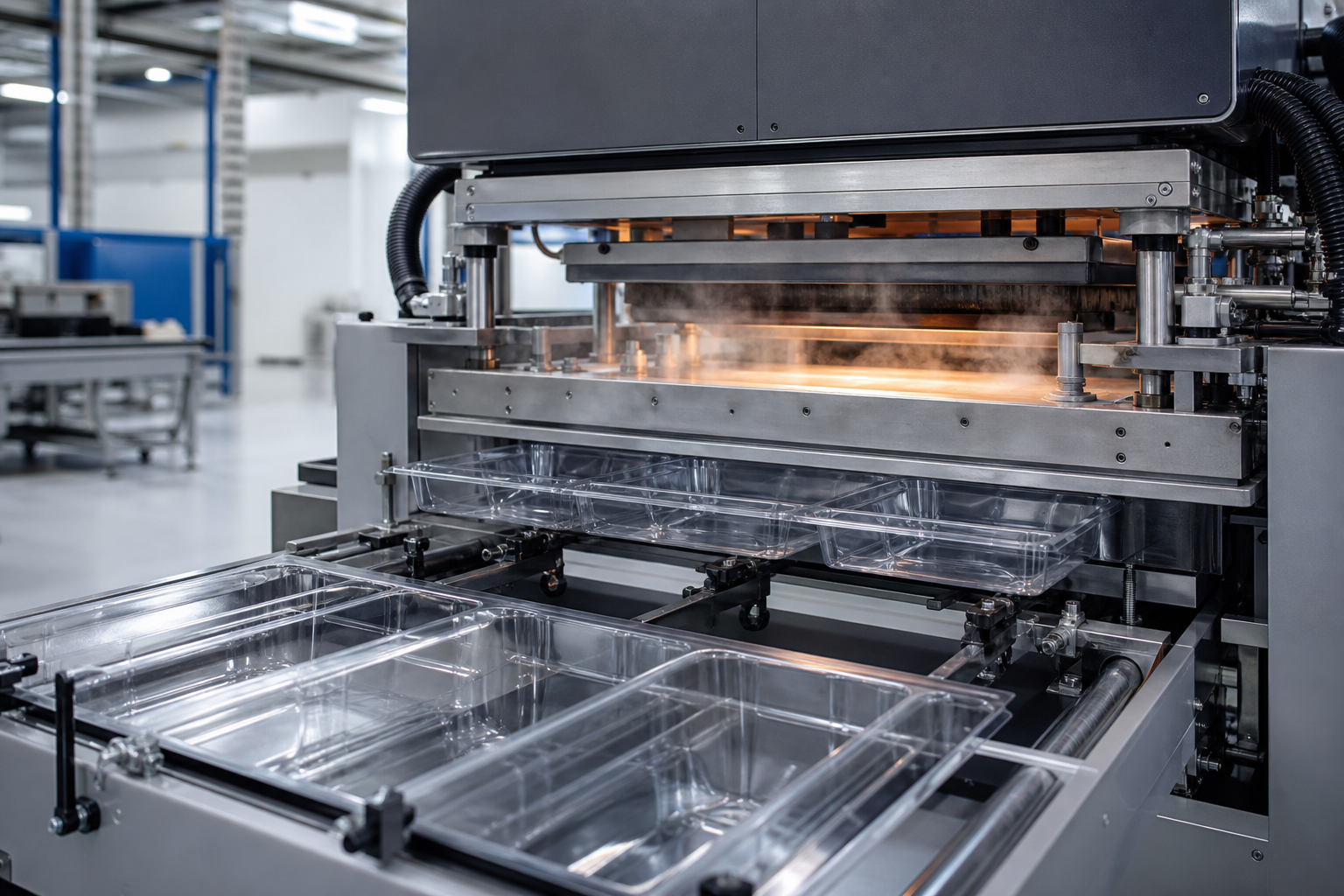
Thermoforming works by heating a plastic sheet until it becomes formable, then shaping it over a tool. Once the material takes the intended form, the tray is cooled, trimmed, and prepared for inspection or further review. That simple description hides an important buying reality: part fit is influenced by both design intent and forming behavior.
This is why a drawing alone is not always enough. Deep pockets, tight tolerances, unusual part geometry, and delicate contact surfaces all need real-world validation. A tray can look correct in a design review and still need adjustment once formed and tested with the actual part.
Inspection and fit validation are part of the real process
The manufacturing step is only one part of getting a usable tray. Inspection and fit validation are what tell you whether the tray actually does the job. Buyers should review pocket fit, part movement, tray stiffness, stacking performance, and ease of loading and unloading. If lids, covers, or nested stacking are part of the program, those features also need to be checked under real handling conditions.
This is where buyer input matters most. A supplier can form a tray to the agreed concept, but only your team can confirm how it performs in your line, your packout flow, and your shipping environment. That is why strong projects usually include sample evaluation, not just drawing approval.
What buyers should ask before approving a tray
The best buyer questions are practical. Ask what material is being proposed and why. Ask what features are carrying the part load and controlling movement. Ask how the tray is expected to stack, nest, or ship. Ask what dimensions are most critical to fit. Ask whether future revisions will require design changes, tooling updates, or both.
It also helps to ask whether your use case is truly custom. Some applications can be solved faster with stock trays from the catalog or the online store. Others need custom pocket geometry because the cost of part movement, count errors, or cosmetic damage is too high. Understanding that difference early can save time on both sourcing and internal approvals.
Why the process matters for cost, lead time, and quality
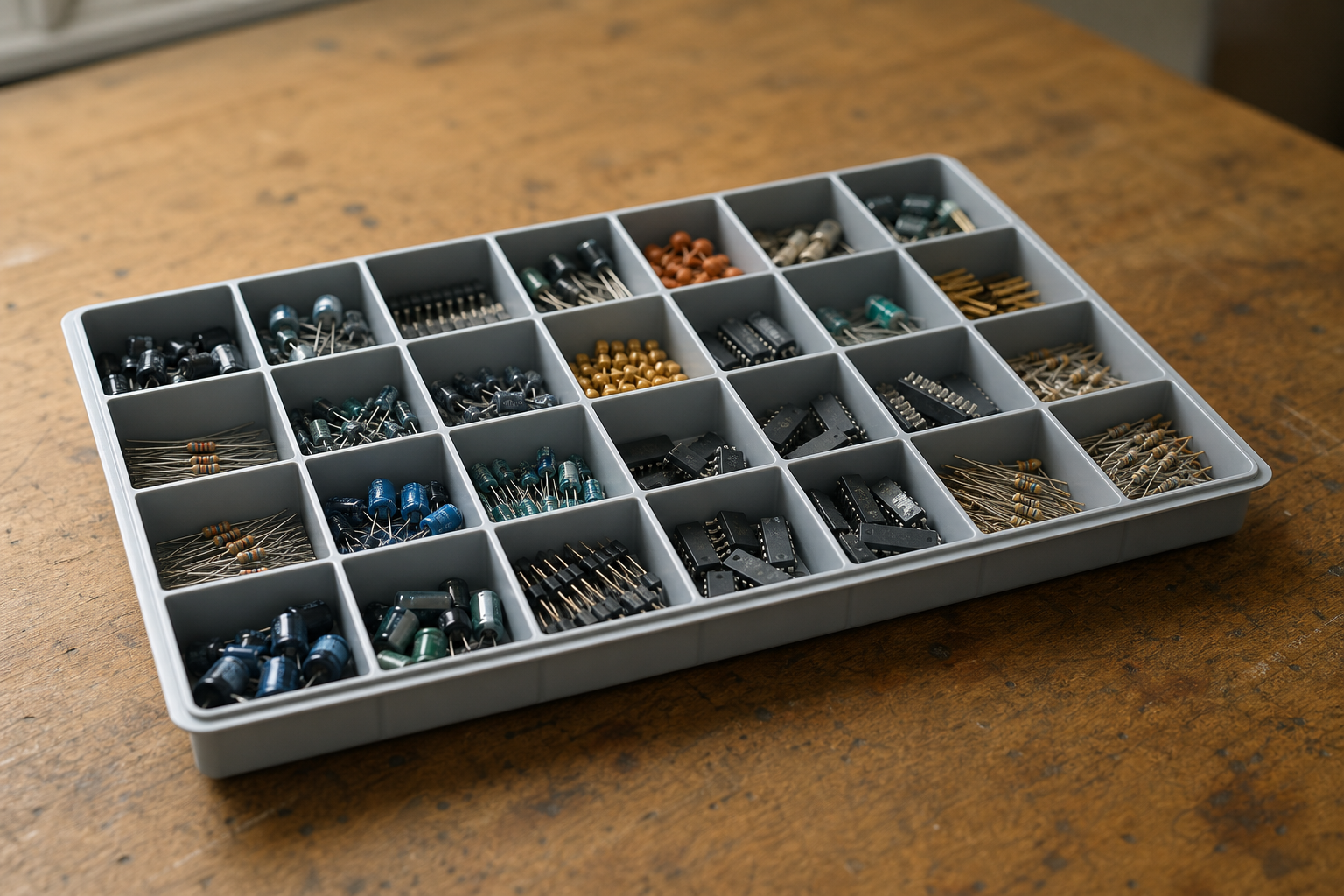
Buyers often look at price first, but process knowledge gives better context for total risk. A tray with the wrong geometry or material can create hidden costs through damage, slower packing, or inconsistent handling on the floor. A tray built around the actual part and workflow can reduce avoidable friction across receiving, storage, assembly, and shipment.
The same logic applies to timing. Lead time is not just about production capacity. It is also shaped by part data quality, design clarity, material choice, tooling decisions, and how quickly samples can be reviewed and approved.
For buyers, the main takeaway is simple. Understanding the thermoformed tray manufacturing process helps you ask sharper questions before you commit. That usually leads to better fit, fewer revisions, and a smoother path from concept to production. If you need help reviewing part geometry, material options, or whether your application should use stock or custom trays, contact us to discuss the project.
If you are still comparing off-the-shelf options, it often makes sense to request a free sample first. If your parts need specific pocket geometry, spacing, or material features, request a custom tray quote instead.