
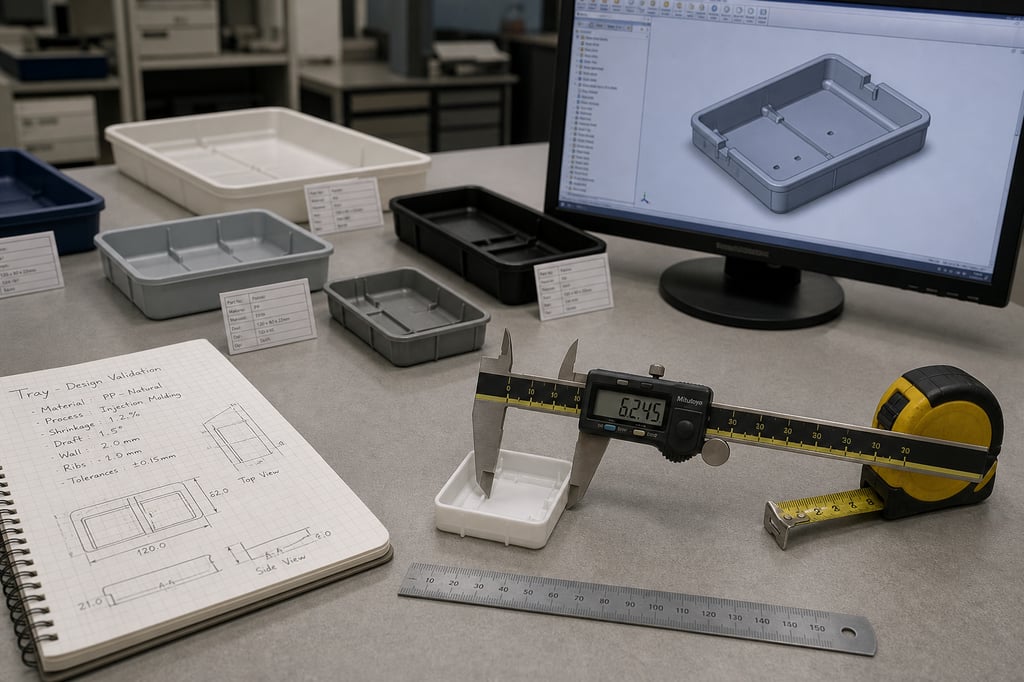
Why Measurement Matters Before You Pick a Tray
Tray selection starts with fit, but fit is not just a pocket dimension on a product page. The right tray needs to hold the part in a repeatable orientation, protect critical surfaces, and still work inside your real process, including loading, unloading, inspection, stacking, lids, and shipping.
If your part matches a standard pocket, stock trays can be the fastest path. If the part has unusual geometry or delicate features, custom trays give you more control over pocket shape, depth, and orientation.
What To Measure On The Part
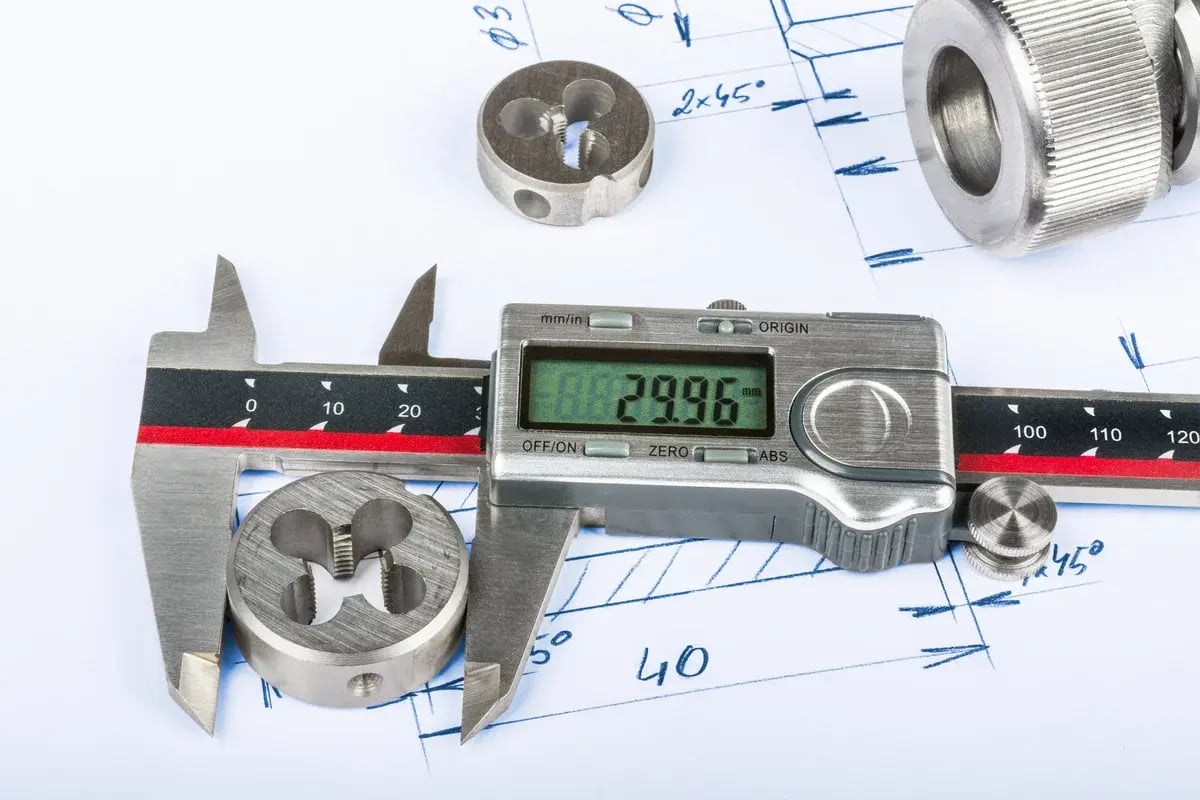
Start with the actual part, not the drawing alone. Coatings, caps, and assembled features can change what the tray must hold. Measure the part in the exact orientation you want in the pocket.
At a minimum, capture these dimensions:
- Maximum length, width, and height of the part
- Widest feature, flange, or protrusion that could catch on the pocket wall
- Critical surfaces that cannot contact other parts or hard tray features
- Preferred part orientation for packing, counting, inspection, or picking
- Part weight if the item is dense enough to affect tray thickness or retention
Round, Square, And Irregular Parts Need Different Attention
Simple round or square parts are often easier to match to a stock cavity, but diameter alone is not enough. Check height, edge conditions, and whether the part can tilt or rotate. Irregular parts need more detail, especially when tabs, connectors, stepped diameters, or fragile corners are involved.
Measure The Process, Not Just The Product
A tray can look correct on paper and still fail in use. That happens when teams measure only the part and ignore the workflow around it. Ask how the part enters and leaves the pocket, whether orientation matters, and whether trays will be stacked with or without lids.
Material and tray format matter too. A deeper pocket may improve retention, but it can slow down picking if finger clearance is too tight. A lid only helps if the tray and lid combination works with your stack height and carton. Ready-Made’s materials page is useful when the application also needs clarity, ESD protection, or a different resin than standard HIPS or PET.
Before you decide, document:
- How parts are loaded and removed
- Whether the tray must support manual handling, automation, or both
- If trays will be stacked, lidded, or placed in cartons with height limits
- Whether orientation matters for kitting, inspection, or line presentation
How To Compare Part Measurements To Tray Specs
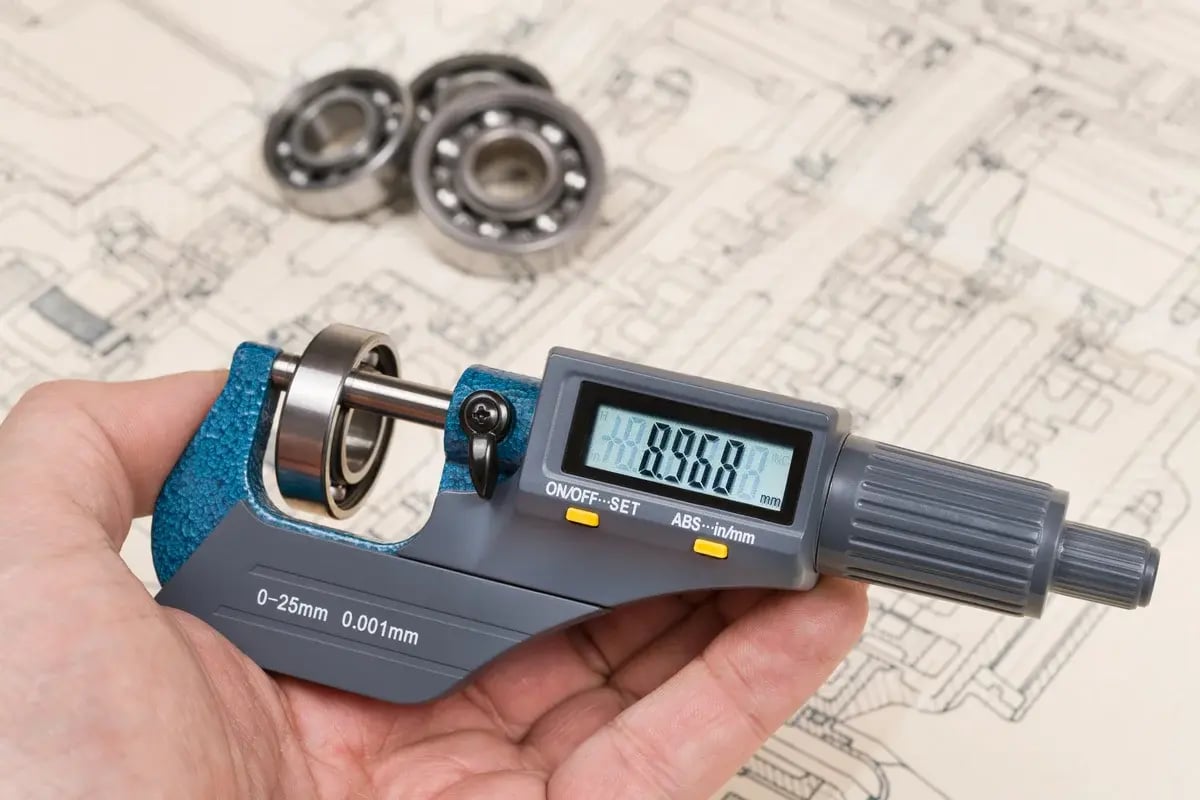
Once you have the part data, compare it to the tray data that actually controls fit. On Ready-Made product pages and in the tray catalog, the most important fields are usually pocket dimensions, pocket depth, pocket count, tray footprint, and tray thickness.
Pocket opening tells you whether the part can enter the cavity. Pocket depth tells you how much of the part is supported. Tray thickness matters for stiffness and handling. Overall footprint matters if trays must fit existing cartons, totes, or workstations.
Be careful with a measurement that looks close enough on paper. A near match can still create problems if the part has sharp corners or a feature that sits higher than the main body. That is why fit validation with real parts matters.
When A Stock Tray Is Enough And When To Go Custom
A stock tray is often the right answer when your part fits an existing pocket without force, stays stable, and does not need special handling features.
Move toward a custom tray when the part needs shaped support, controlled orientation, finger access, cavity numbering, rack compatibility, or a specific material choice. The same is true when small movement inside the pocket could create cosmetic or functional issues. Ready-Made’s guide on stock vs custom plastic trays gives a useful framework if you are deciding between those two paths.
The Best Way To Confirm Fit Before You Order
The fastest way to reduce uncertainty is to test with real parts. Ready-Made’s Get a Free Sample program lets you evaluate stock tray fit before committing. A simple sample check can confirm pocket fit, orientation, part removal, lid compatibility, and workflow handling.
If a stock tray is close but not quite right, the sample result gives you a better starting point for a custom tray quote. You can show where the part shifts, where clearance is too tight, or which feature needs more support.
If you want to validate fit before placing a larger order, Get a Free Sample. If your part geometry or workflow calls for something more specific, contact Ready-Made about a custom tray.