
Start with the risk, not the package
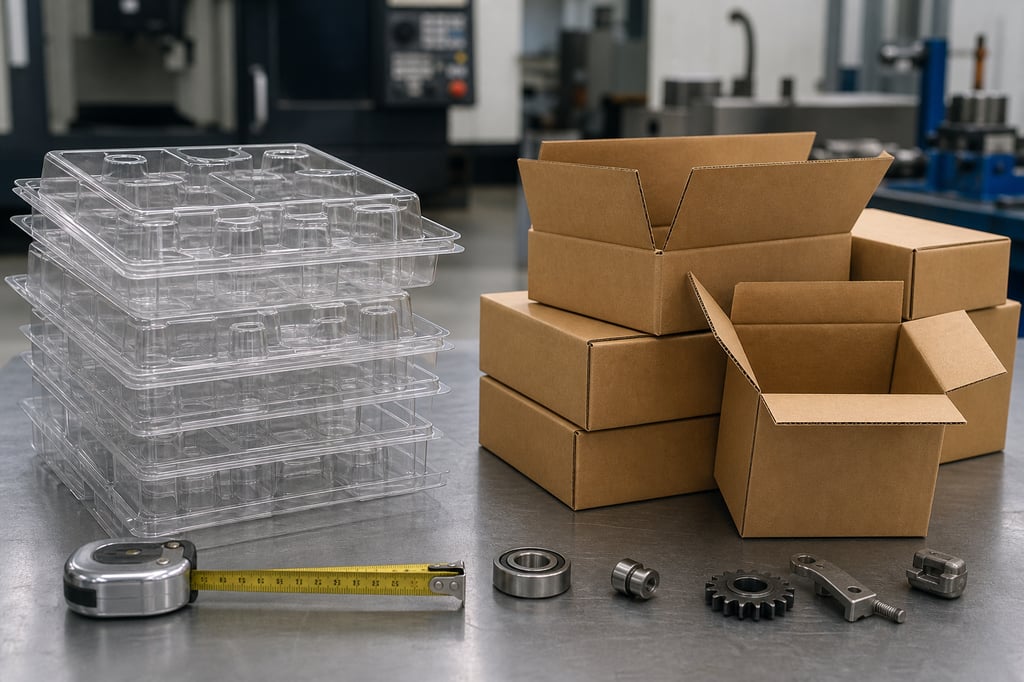
Plastic trays and corrugated are often compared as if they are interchangeable. They are not. The better question is what the package has to prevent. If a part can rub, chip, mix, flip, or pick up debris, the package is doing more than holding product. It is protecting quality, supporting handling, and shaping what happens at receiving and packout.
Corrugated is still a practical choice for many shipments. It is familiar, easy to source, and works well when the part is robust and internal presentation does not matter. But once a program needs position control, visual count verification, or repeatable loading, corrugated by itself usually stops being enough.
When corrugated is enough
Corrugated usually makes sense when the parts are durable, the shipment is one-way, and some movement inside the pack is acceptable. It also works well when the product is large enough that internal pockets would add cost without much extra protection. For simple containment jobs, corrugated can be the right answer.
That is especially true when the package is opened once and discarded, or when minor contact between units will not affect fit, finish, or function. In those cases, the added control of a tray may not create enough value to justify a change.
When trays lower risk
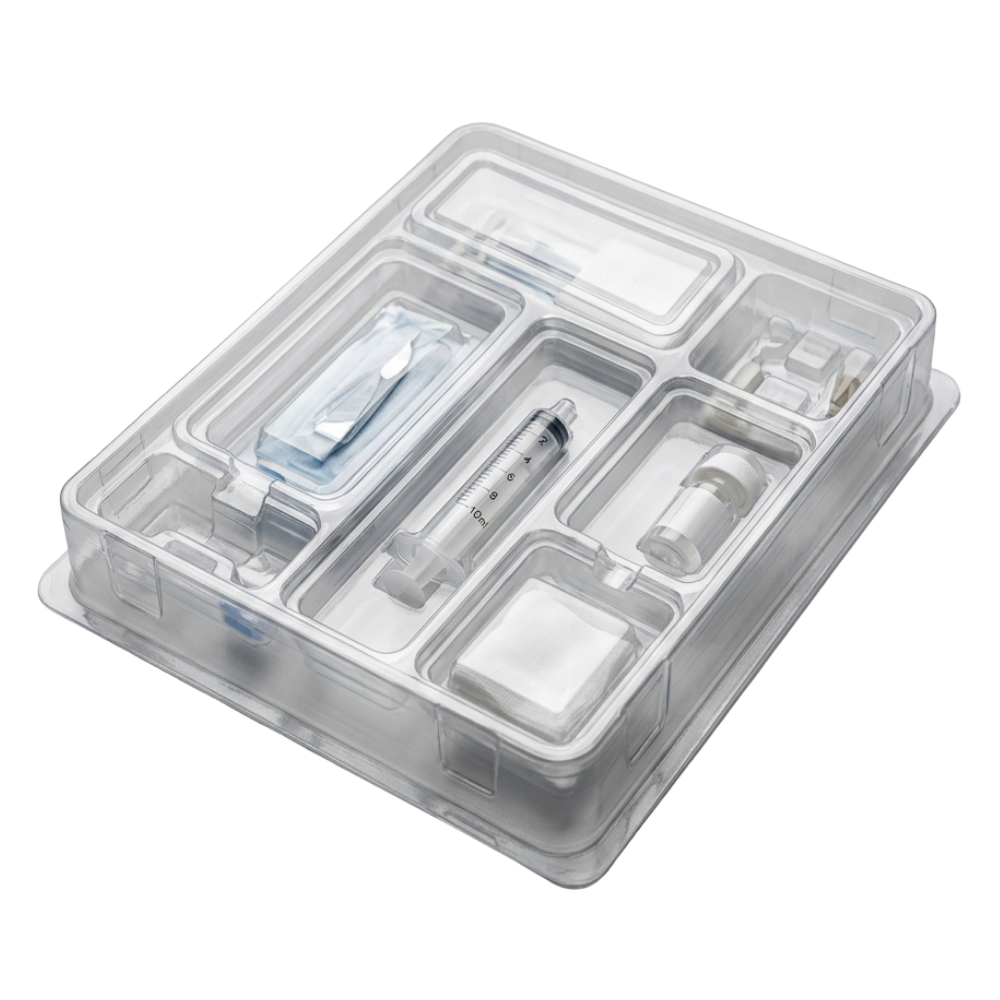
A thermoformed tray starts to earn its place when each part needs its own space. Separate pockets reduce contact. Stable orientation makes parts easier to count, inspect, and load. Consistent cavity placement also helps operators move faster because every part is presented the same way.
That pattern shows up in machining and precision component programs where finish protection and controlled handling matter. The Treske Precision Machining case study is a good example of trays being selected for reusable, stackable, lower-risk handling rather than simple one-time shipment.
The advantage is not limited to transit. Trays can also improve in-process staging, line-side presentation, returnable flow, and receiving accuracy. Corrugated may still be part of the pack, but the tray becomes the feature that controls the part.
The four issues that usually decide it
The first issue is contact. If parts touch each other, every vibration cycle creates a chance for abrasion, dents, or cosmetic damage. Trays reduce that risk by separating parts with fixed cavities.
The second issue is orientation. If the next step depends on seeing, counting, or picking parts in a known direction, a tray solves that more cleanly than loose packing inside corrugated.
The third issue is handling consistency. Standard pocket geometry makes shortages, mixed parts, and empty positions easier to spot. That can matter as much on the floor as it does in shipping.
The fourth issue is reuse. When packaging circulates between supplier, plant, and customer, the decision changes. A reusable tray can support multiple cycles while reducing repacking friction and lowering repeated exposure to damage.
Why the cheapest pack is not always the lowest-cost pack
A corrugated solution may have the lower line-item price. But that number does not capture reinspection time, sort time, packout inefficiency, or the cost of replacing damaged parts. For precision components, packaging risk often shows up later as labor cost, quality cost, or customer friction.
That is why physical testing matters. You can get a free sample and see how a tray performs with your real parts, stacks, and handling steps before committing to a broader change.
If stock geometry will not hold the part securely enough, custom trays make it possible to build around the part shape, the process, and the level of protection the program actually needs.
»